

About creative@emmatang.com

This author has not yet filled in any details.
So far creative@emmatang.com has created 46 blog entries.

Choosing an Elevator Repair Company: How to Avoid Violations

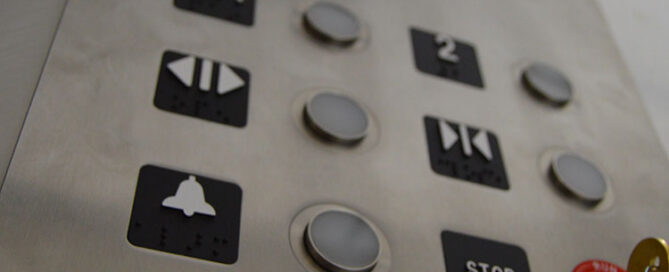
In our January 2020 blog, we shared a quick guide to elevator violations in NYC, outlining the annual elevator inspections conducted by the NYC Department of Buildings (DOB) and other relevant violations. Today, we’ll continue to elaborate on how working with an elevator repair company can help you avoid violations and costly penalties. Here are 4 helpful tips to guide you towards choosing the right elevator repair company so you can steer clear of any elevator violations.
By |2026-03-30T16:43:56+00:00March 30, 2026|Uncategorized|Comments Off on Choosing an Elevator Repair Company: How to Avoid Violations

An Elevator Guide: When to Modernize Your Elevator

After many years of faithful service, it may be time to modernize your elevator. Regular use will eventually impact its performance and efficiency, and it may no longer be as aesthetically pleasing or cost-effective as it was upon its installation years (or decades) ago. Typically, industry experts recommend modernization services at the end of an elevator system’s lifespan, ranging from 20 to 25 years.

By |2026-03-30T16:40:41+00:00March 30, 2026|Uncategorized|Comments Off on An Elevator Guide: When to Modernize Your Elevator

3 Signs That You May Need a Commercial Elevator

All passenger elevators are classified by cab weight capacity, the cab size, and the elevator speed. The cab weight classification for commercial lifts is between 2,100 and 5,000 pounds. The cab width must be 51 inches depth and 68 inches wide to hold the most persons. The Americans With Disabilities (ADA) Act requires that elevators in commercial businesses or multi-floor residential complexes be placed in easily accessed locations. One distinct difference between passenger elevators in high-trafficked buildings is in the elevator stops.

By |2026-03-30T16:34:39+00:00March 30, 2026|Uncategorized|Comments Off on 3 Signs That You May Need a Commercial Elevator

Hydraulic Elevators: Types & Benefits

The mechanics of the high-rise elevator systems mentioned above consist of cables and sheaves, also known as pulleys, which run between the elevator cab and elevator machine room, counterweights that balance the elevator cab, the electric motor, and the braking system. These mechanical elevators are also referred to as “traction elevators.” Traction elevators are recommended for NYC skyscrapers due to their energy efficiency, smooth ride, and high-speeds that whisk passengers to their desired floor, faster than its passengers can ‘name the tune’ of the elevator ‘muzak’ played inside the cab.

By |2026-03-30T16:31:37+00:00March 30, 2026|Uncategorized|Comments Off on Hydraulic Elevators: Types & Benefits

3 Elevator Maintenance Contract Guidelines to Follow

Elevator violations can be costly, as described in the blog, Correcting Department of Buildings OATH Violations, and why the investment in an elevator maintenance plan is a ‘no-brainer’ when considering the cost of elevator service disruption, unhappy tenants, and liability issues for Failure To Maintain the elevator.

By |2026-03-30T16:24:46+00:00March 30, 2026|Uncategorized|Comments Off on 3 Elevator Maintenance Contract Guidelines to Follow

Everything You Need to Know About the Door Lock Monitoring Code

A myriad of city codes can boggle the mind of responsible NYC building and property owners maintaining safe building operations. According to the NYC Department of Buildings (DOB), there are mechanical codes, electrical codes, housing maintenance codes, plumbing codes, fire codes, energy codes, and fuel-gas codes to consider every day. Elevators are not exempt from such DOB compliance codes. As of January 1, 2020, all NYC building elevators needed to comply with the DOB elevator door lock monitoring code.

By |2026-03-30T16:20:37+00:00March 30, 2026|Uncategorized|Comments Off on Everything You Need to Know About the Door Lock Monitoring Code

How Preventative Maintenance Can Help Keep Your Elevator Costs Low

Property taxes, liability insurance, a mortgage — Oh My! These are the three fixed costs of owning or managing an office building, condo, or apartment building. There are also the daily, weekly, monthly, and annual operating expenses included in every business budget, such as snow removal, landscaping, trash removal, and recycling. Indeed, owning or managing a commercial building takes a keen sense for business budgeting, which falls under the general category of property management.

By |2026-03-30T15:56:26+00:00March 30, 2026|Uncategorized|Comments Off on How Preventative Maintenance Can Help Keep Your Elevator Costs Low

Why Disinfecting Elevators is Essential During COVID-19

The quandary of building owners and managers during the Coronavirus (COVID-19) is how to keep their elevators running safely while adhering to state orders to maintain ‘social distance’ within the typically tight confines of an elevator cabin. Elevator passengers, also, ponder how to safely ride the vertical transportation devices, shoulder-to-shoulder with neighbors, and work colleagues.

By |2026-03-30T15:49:46+00:00March 30, 2026|Uncategorized|Comments Off on Why Disinfecting Elevators is Essential During COVID-19

Is It Time to Conduct Some Routine Elevator Maintenance?

In our January blog, 4 Best Practices For Winterizing Elevators, we described the best practices for sustaining the proper functioning of an elevator in winter. A 2018 NYC Department of Buildings Elevator Report indicated there were over 84,000 vertical transportation devices in New York City, with 63,000 of these devices being passenger elevators carrying over 100,000 riders on 35 million trips DAILY! 

By |2026-03-30T15:43:21+00:00March 30, 2026|Uncategorized|Comments Off on Is It Time to Conduct Some Routine Elevator Maintenance?

Elevator Etiquette: Playing the Right Elevator Music

As an elevator transports riders’ up and down to their daily destinations, the passengers are often unaware the reason for their calm and contented demeanor has as much to do with the soothing sounds of the elevator etiquette-approved piped-in music, commonly referred to as elevator ‘muzak.’ Elevator ‘muzak’ was the brainchild of a World War I U.S. Army Chief Signal Officer, Major General George O. Squier. Since radio was still only a promising innovation in the 1920s, Squier would transmit radio signals across electrical wires.

By |2026-03-30T15:40:50+00:00March 30, 2026|Uncategorized|Comments Off on Elevator Etiquette: Playing the Right Elevator Music
Go to Top